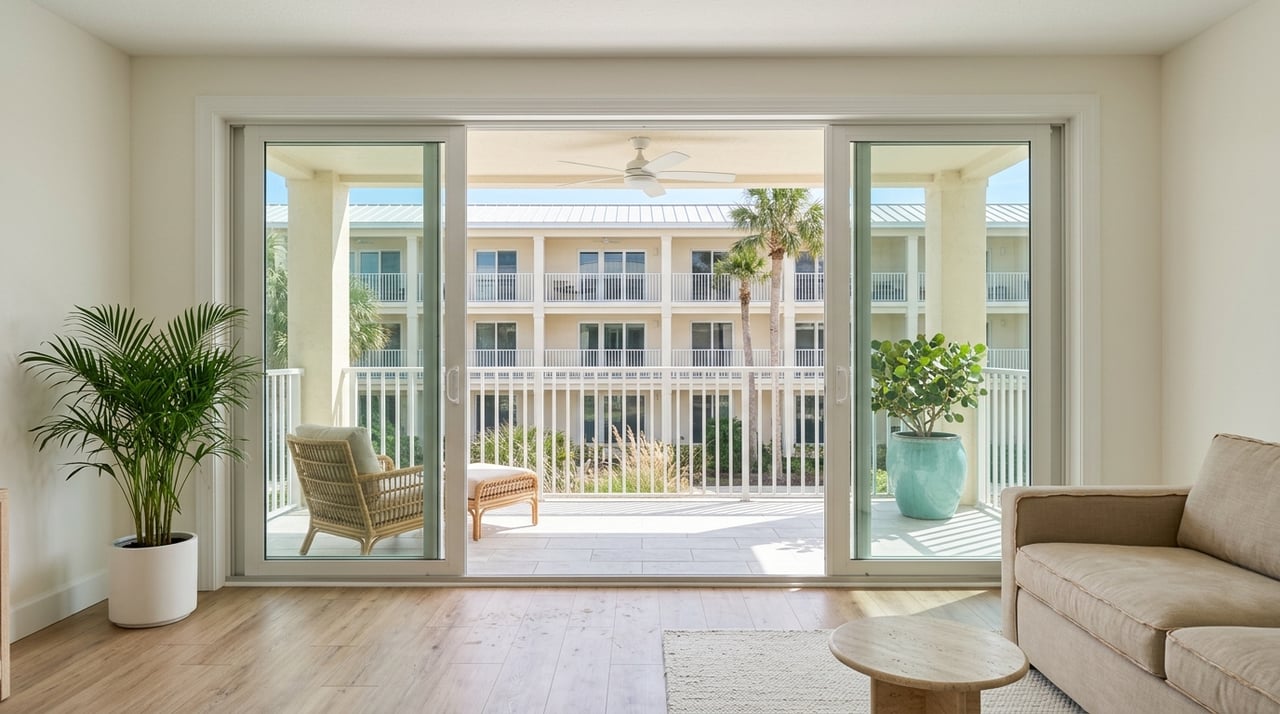
If you are eyeing a Miramar Beach condo as a rental investment, the real question is not simply whether guests want to stay here. They do. The smarter question is which condo, in which building, with which rules and amenities, is most likely to perform well over time. That is where careful underwriting matters, and it is where local market knowledge can give you an edge. In this guide, you will learn how to evaluate Miramar Beach condos through the lens of demand, amenities, HOA risk, county rules, and real-world operating costs. Let’s dive in.
Why Miramar Beach Gets Investor Attention
Miramar Beach benefits from being part of South Walton’s larger beach-driven visitor economy, which is built around 16 distinct neighborhoods, year-round events, and 26 miles of beaches. According to the Spring 2024 Visitor Tracking Study, Walton County and South Walton recorded 1,331,700 visitors, 1,028,400 room nights, $1.157 billion in direct spending, 55.2% occupancy, a $376.29 ADR, and $207.71 RevPAR.
That matters if you are buying for income. It suggests demand is not tied only to a short summer window. It also shows why investors often treat Miramar Beach as a distinct resort-condo market rather than just another coastal zip code.
Another detail from the same study is especially important. Visitors had an average planning cycle of 99 days, 52% used vacation-rental websites while planning, and 68% considered only one neighborhood. In plain terms, guests often decide on the area first and the unit second, which makes micro-location and online visibility especially important in Miramar Beach.
Why Micro-Location Matters
South Walton is marketed neighborhood by neighborhood, not as a generic beach destination. That means your condo’s position within Miramar Beach can shape demand just as much as its size or price point. Beach access, proximity to resort amenities, and ease of getting to dining, golf, tennis, or events can all affect how often your calendar fills.
Because 68% of visitors considered only one neighborhood, comparing a Miramar Beach condo to broad county averages can miss the point. A better approach is to benchmark it against the broader South Walton and 30A condo set, then narrow further to its specific building, amenity package, and guest experience.
This is one reason resort-oriented properties often stand out. In a market where guests are booking a lifestyle as much as a unit, convenience tends to matter.
Resort Amenities Can Drive Performance
Miramar Beach has an unusually resort-heavy condo inventory. Official destination listings highlight major communities such as Sandestin Golf and Beach Resort, TOPS’L Beach & Racquet Resort, and Seascape Resort as amenity-rich destinations with combinations of beach access, pools, golf, tennis, spa services, dining, retail, marina access, and event space.
For example, Sandestin is marketed with seven miles of beaches, four championship golf courses, 15 tennis courts, and a 123-slip marina. That does not guarantee a specific unit will outperform. It does, however, support a practical takeaway: guest convenience and amenity depth often matter more than simply buying the lowest-priced condo near the water.
When you compare investment options, look beyond bedrooms and square footage. Ask how easy the property is for a guest to enjoy without getting back in the car.
Amenities to weigh carefully
When you evaluate a Miramar Beach condo, pay attention to:
- Direct or easy beach access
- Pool quality and number of pools
- Golf, tennis, or spa access
- On-site dining or nearby walkable dining
- Marina or water access, if relevant to the resort
- Event and wedding demand drivers nearby
- Parking convenience for guests
- Elevator access and general ease of use
A strong amenity stack can support occupancy and nightly rate potential, but only if the building’s rules actually allow you to operate the way you expect.
HOA Rules Can Make or Break the Deal
In Miramar Beach, the condo declaration is not just legal paperwork. It is part of your underwriting. Florida law allows condominium declarations to include enforceable use and occupancy restrictions, and changes to rental terms can affect future owners and consenting owners depending on how amendments are adopted, as outlined in Florida Statute 718.104.
That means you should never assume a condo can be rented just because a listing says it has rental potential. Before you move forward, review the declaration, amendments, house rules, and recent meeting minutes. These documents can reveal rental caps, minimum-stay rules, guest restrictions, pet limits, parking rules, and other operating constraints.
HOA due diligence checklist
Before buying, make sure you verify:
- Whether short-term rentals are allowed
- Any minimum rental period requirements
- Whether there is a rental cap or waitlist
- Rules on guest occupancy and parking
- House rules affecting check-ins, trash, or common areas
- Recent or pending amendments to rental policies
- Special assessments or major building projects
- Reserve funding and budget trends
This is one of the clearest areas where building-specific research matters more than broad market optimism.
Reserve Studies and Special Assessments Matter
Florida’s condo reserve rules have become a major factor for investors, especially in buildings that are three habitable stories or higher. Under Florida Statute 718.112, qualifying associations must complete structural integrity reserve studies at least every 10 years, and budgets adopted on or after December 31, 2024 must maintain required reserves for covered items.
For you as a buyer, that can translate into higher HOA dues, larger reserve contributions, or special-assessment risk. A condo with a lower purchase price but weak reserves may be more expensive in practice than a better-managed building with stronger financial planning.
Review the current budget, reserve study status, and any discussion of deferred maintenance. If the building is taller or older, this step becomes even more important.
Know Walton County Rental Rules
Miramar Beach investors also need to understand Walton County’s short-term rental framework. The county’s short-term rental FAQs note that condominiums are excluded from the county certification process, but the county also states that short-term vacation rentals require annual registration and that DOR, DBPR, and TDT registrations are prerequisites.
That wording is exactly why condo buyers should verify the status of the unit and association before assuming anything is automatic. County language uses both certification and registration concepts, so it is wise to confirm how the property is currently operating and what filings are in place.
The same county guidance also outlines practical operating standards that can affect returns. Maximum occupancy is one person per 150 square feet of usable floor area or a lower agreed maximum. A designated local responsible party must be reachable 24/7, able to respond within one hour, and monitor the unit weekly for parking and trash issues.
If county registration applies, the current fee schedule listed by the county is $300 for an individual registration or $227 for a community registration. Renewals are due 60 days before expiration, and operating without registration can trigger a $500-per-day penalty, according to the Walton County FAQs.
Understand the Tax Picture
Revenue projections can look strong until you fully account for taxes. The Walton County Clerk’s tourist tax guidance states that South Walton short-term rentals are charged a total rental tax of 12.0%, made up of 6.0% Florida sales tax, 1.0% Walton County discretionary sales tax, and 5.0% South Walton TDT.
The same source also notes that the taxable base includes mandatory nonrefundable fees such as cleaning, pet, and amenity fees. It further states that no rental platform remits TDT on behalf of owners and that returns must still be filed even when there is no rental activity.
For underwriting, this means your top-line revenue estimate should never be your take-home number. You need to model taxes, HOA dues, insurance, utilities, management, housekeeping, maintenance, and reserve risk before calling a unit cash-flow positive.
Use Public Data Before Trusting Marketing Copy
If you want a cleaner picture of a condo’s rental potential, public records can help. The Spring 2024 Visitor Tracking Study explains that local tourism reporting combines county-clerk data, property-level rental data, Key Data, and visitor and property surveys.
That gives you a useful framework for due diligence. You can pair county-level tourism trends with parcel-level verification and licensing research instead of relying only on listing descriptions.
Useful public-data steps
A practical workflow can include:
- Checking county GIS to verify zoning by parcel
- Reviewing the Florida DBPR vacation-rental license status for the address
- Confirming tax and registration status where applicable
- Comparing historical rental patterns to event-heavy periods
- Reviewing HOA documents for operational restrictions
This process helps you separate a true investment-grade condo from a unit that only sounds attractive in a marketing summary.
Look at the Calendar, Not Just Annual Averages
Annual occupancy and average daily rate are useful, but they do not tell the whole story. In Walton County, booking behavior is internet-driven and often happens far in advance. The visitor study found an average booking lead time of 99 days, and the county’s annual events overview supports the idea that the area is not built around a single short peak season.
For Miramar Beach, calendar density can be shaped by spring break, summer travel, holidays, weddings, golf demand, and tennis events. A condo that performs well during these high-intent booking windows may be more valuable than one that only looks average on an annual spreadsheet.
When you compare units, study historical occupancy and minimum-stay patterns around these periods. That can tell you more about real earning power than a simple annual gross estimate.
How to Compare Miramar Beach Condos
Not every appealing condo is a strong rental investment. A better comparison framework looks at operating reality, not just purchase price.
| Factor | Why it matters |
|---|---|
| Building rules | Rental caps, minimum stays, and guest restrictions can limit income |
| Amenity package | Beach access, pools, golf, tennis, and walkability can support demand |
| HOA financial health | Reserve requirements and assessments can change your carrying costs |
| Registration and tax setup | Compliance issues can create delays, penalties, or surprise costs |
| Calendar strength | Event periods and booking lead time affect revenue stability |
| Guest convenience | Parking, elevators, access, and layout influence reviews and repeat bookings |
If you are weighing Miramar Beach against nearby coastal markets, remember that county structure matters too. Miramar Beach operates within Walton County’s own tourism and short-term rental framework, which differs from neighboring systems. That is why the best comparison is rarely just price per square foot.
A Smarter Way to Underwrite the Opportunity
The best Miramar Beach condo investments usually share a few traits. They sit in a location guests already want, offer a strong amenity story, operate within clear rental rules, and belong to associations with manageable financial risk.
If you are buying with rental income in mind, your goal is not just to find a beautiful unit. Your goal is to find a unit that can hold appeal with guests, comply with building and county requirements, and make sense once taxes, HOA costs, and reserve exposure are fully modeled.
That is where local, building-level guidance can save you time and help you avoid expensive surprises. If you are considering Miramar Beach condos and want help comparing options through a rental-return lens, connect with 850 Properties. You will get tailored insight on micro-location, condo rules, and investment fit across the Emerald Coast.
FAQs
What makes Miramar Beach condos attractive as rental investments?
- Miramar Beach benefits from South Walton’s year-round visitor economy, strong ADR and RevPAR metrics, and a resort-focused condo inventory with beach and lifestyle amenities that can support guest demand.
What HOA documents should you review before buying a Miramar Beach rental condo?
- You should review the condo declaration, amendments, house rules, current budget, reserve information, and recent meeting minutes to check for rental caps, minimum stays, guest rules, and assessment risk.
What taxes apply to short-term rentals in Miramar Beach?
- According to the Walton County Clerk, South Walton short-term rentals are subject to a total rental tax of 12.0%, which includes 6.0% Florida sales tax, 1.0% Walton County discretionary sales tax, and 5.0% South Walton TDT.
What Walton County rules should condo investors know before buying in Miramar Beach?
- Buyers should verify registration status, occupancy rules, parking limits, and local responsible-party requirements, and confirm whether the specific condo and association are eligible for the intended rental use.
Why is micro-location important for Miramar Beach condo performance?
- South Walton visitors often choose a specific neighborhood first, and many consider only one area, so beach access, resort setting, and guest convenience within Miramar Beach can strongly influence bookings.
How should you evaluate rental income potential for a Miramar Beach condo?
- Look beyond annual averages and study booking lead times, event periods, occupancy patterns, taxes, HOA costs, reserve exposure, and the building’s amenity package before estimating returns.