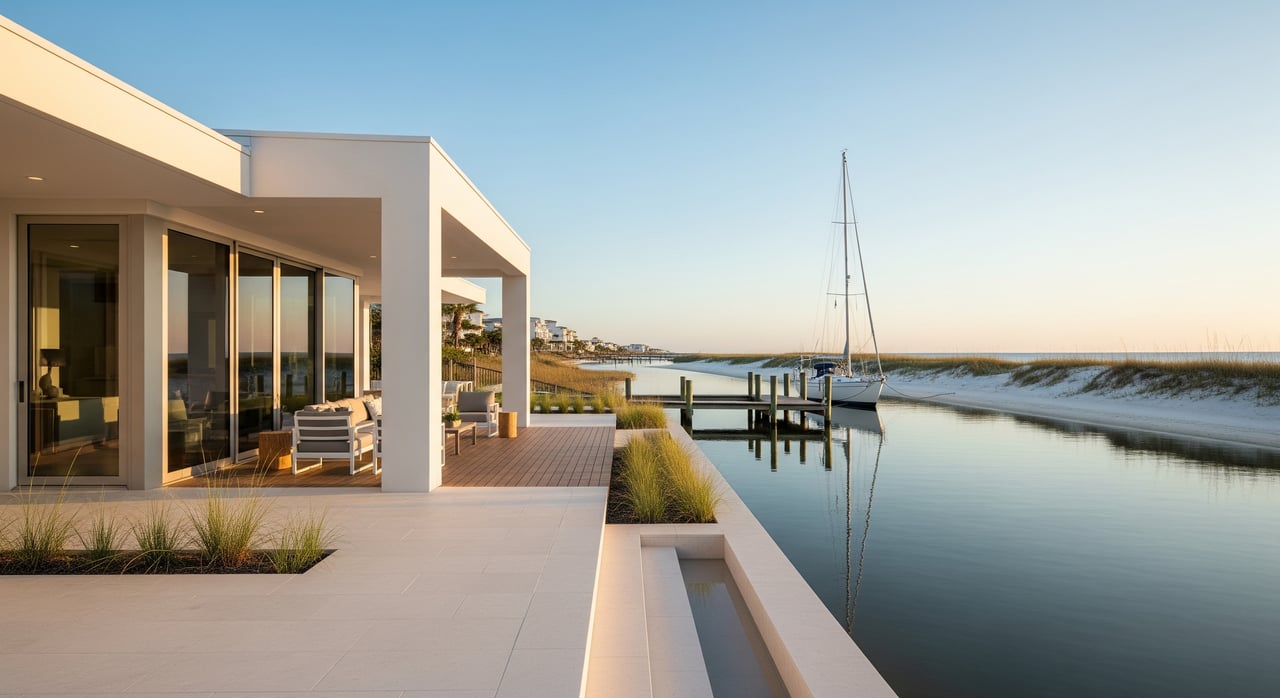
Torn between waking up to the beach and walking out to your boat? In Miramar Beach, you can do either, but each waterfront lifestyle comes with different tradeoffs. If you want crystal‑clear expectations on access, upkeep, insurance, and potential rental performance, you’re in the right place. This guide compares bayfront and Gulf‑front options in Miramar Beach so you can align your purchase with how you plan to live and invest. Let’s dive in.
Miramar Beach waterfront basics
Miramar Beach sits between the Gulf of Mexico and Choctawhatchee Bay. Gulf‑front homes and condos offer direct beach access and open‑water views. Bayfront properties sit on the bay or adjacent tidal channels with calmer, shallower water and protected shorelines.
These settings create different day‑to‑day experiences. The Gulf brings surf, dunes, and sunsets over white sand. The bay delivers glassy mornings, boating access, and quieter coves. Your choice should start with how you plan to use the property most.
Lifestyle differences that matter
Beach and daily sand access
- Gulf‑front: You step onto the sand. Swimming, sunbathing, beach walks, and surf days are part of your daily rhythm. If your dream is a beach‑driven lifestyle, Gulf‑front is the direct route.
- Bayfront: You do not have Gulf sand at your back door. Shorelines may be seawalls, riprap, marsh, or small pocket beaches. Water is typically calmer and shallower, which changes how you swim and play.
Boating and marina convenience
- Bayfront: Private docks and boat lifts are common, and the water is usually calmer. If you want immediate, year‑round boating, bayfront is the clear winner.
- Gulf‑front: Nearshore sandbars and beach zones make private deepwater docking uncommon. You typically launch through public ramps or nearby marinas and pass through local inlets to reach the Gulf.
Views, privacy, and seasonal activity
- Gulf‑front: Big, unobstructed views and photo‑ready sunsets fuel demand, especially for vacationers. Proximity to public beach access points can mean more seasonal foot traffic and noise.
- Bayfront: Serene water vistas and boat activity replace surf and crowds. Many bayfront streets feel quieter, though homes near marinas or channels can experience boat noise.
Wildlife and environment
- Bayfront: Expect estuarine life like seagrass, wading birds, and fish. Depending on the lot, you may see tidal flats or grass beds that influence shoreline use.
- Gulf‑front: Dune systems and sandy beach habitat shape the setting. Seasonal protections for dunes and nesting areas can influence access and lighting.
Ownership and maintenance realities
Shoreline and erosion management
- Gulf‑front: Open‑water exposure increases erosion risk. Dunes are critical, and the Florida Coastal Construction Control Line regulates how and where you can build or modify structures near the beach. Review the Florida DEP Coastal Construction Control Line to understand constraints.
- Bayfront: Seawalls, bulkheads, or riprap are common for shoreline stability. These need inspections and periodic repairs. If a dock is present, confirm permits, materials, and any dredging history for consistent boat access.
Salt, structure, and systems
- Both: Salt air affects metals, fasteners, balcony rails, HVAC components, and exterior finishes. Routine inspections and proactive maintenance are essential.
- Gulf‑front: Salt spray and wind exposure are typically stronger and can accelerate corrosion. Expect more frequent repainting and component replacement.
Utilities and HOA rules
- Utilities: Many newer Gulf‑front developments are tied to municipal services, while some bayfront or interior areas may use septic. Verify connections, system age, and maintenance records.
- HOAs: Gulf‑front condos often run structured vacation rental programs with detailed rules. Bayfront single‑family areas may be more flexible, but local regulations and deed restrictions still govern short‑term rentals.
Risk, insurance, and what to verify early
Flood exposure and elevation
Both Gulf‑front and bayfront properties can be in high‑risk flood zones. Storm surge can arrive from the Gulf or funnel into the bay, and flood insurance requirements depend on your zone and elevation. Pull the parcel’s flood zone on the FEMA Flood Map Service Center, and ask for an elevation certificate to compare with Base Flood Elevation.
Wind and hurricane considerations
Gulf‑front locations are often more directly exposed to wind and waves, which can influence premiums and deductibles. Bayfront homes still face strong winds and surge effects. Confirm wind mitigation features like impact windows, roof tie‑downs, and shutters, which can reduce costs.
Insurance checklist
- Get quotes early for flood and homeowners policies from multiple carriers.
- Ask for recent premium examples for comparable addresses.
- Confirm windstorm and hurricane deductibles and any available credits.
- Review consumer guidance from the Florida Office of Insurance Regulation to understand coverage types and limits.
Rental income, demand, and resale
Demand drivers and guest appeal
- Gulf‑front: Immediate beach access commands a premium and typically draws strong short‑term rental demand. Emotional appeal and marketing advantages support higher rates.
- Bayfront: Boating and fishing access, privacy, and value can attract steady guests, including longer stays outside peak season. Nightly rates may be lower than Gulf‑front but can be balanced by reduced operating costs.
Net returns and costs
- Gulf‑front: Higher gross rental revenue is common, but insurance, exterior maintenance, and mitigation can reduce net yield.
- Bayfront: Seawall and dock upkeep are real costs, but overall exposure may be lower. Model all expenses, including HOA fees, management, cleaning, utilities, and vacancy.
Resale and volatility
Gulf‑front properties often carry a price premium and can be more liquid in peak seasons. They may also be more price‑sensitive in heavy storm years. Bayfront homes can be a value‑forward path into waterfront living, with strong appeal for buyers who prioritize boating and privacy.
Which waterfront fits your goals
Choose Gulf‑front if you:
- Want direct beach access for daily sand time and surf.
- Plan to optimize short‑term rental performance with strong visual appeal.
- Are comfortable with higher exposure and potentially higher maintenance.
Choose bayfront if you:
- Want private docking, lifts, and quick access to calm water.
- Prefer quieter settings and a more private feel.
- Value potential cost savings on exposure, balanced with seawall and dock care.
Due‑diligence checklist for Miramar Beach buyers
Do these before you make an offer or remove contingencies.
- Flood and elevation
- Pull your flood zone on the FEMA Flood Map Service Center.
- Obtain or request an elevation certificate and compare it with Base Flood Elevation.
- Surveys and shoreline
- Order a boundary survey showing the mean high water line and any encroachments.
- Inspect dunes, seawalls, bulkheads, riprap, and docks with coastal‑experienced inspectors.
- Permits and compliance
- Check parcel details and history with the Walton County Property Appraiser, and review county permitting records for shoreline structures and docks.
- Confirm whether the parcel falls within the Florida DEP Coastal Construction Control Line.
- Systems and utilities
- Verify sewer versus septic, system age, permits, and service records.
- Review roof, HVAC, electrical, and any lift equipment for salt‑related wear.
- Insurance and financing
- Get preliminary flood and homeowners quotes from several carriers and review windstorm deductibles and credits.
- Confirm lender requirements for high‑hazard zones.
- Environmental and neighborhood context
- Review local tides and surge context with NOAA Tides and Currents.
- Visit at different times to assess crowding, noise, and seasonal traffic.
- Rental and HOA rules
- Verify HOA documents for rental policies, reserve studies, and insurance for common areas.
- Confirm local registration and tax obligations for transient rentals.
Working with a local advisor
Waterfront in Miramar Beach is not one‑size‑fits‑all. Two homes with similar square footage can live very differently depending on shoreline, elevation, exposure, and rules. A local team that understands docks, dunes, flood maps, and rental dynamics can help you avoid surprises and negotiate the right terms.
Ready to match your lifestyle and investment goals to the right waterfront? Start a focused search and get expert guidance with 850 Properties.
FAQs
What is the key difference between bayfront and Gulf‑front in Miramar Beach?
- Bayfront fronts Choctawhatchee Bay or tidal channels with calmer, shallower water and common private docks, while Gulf‑front sits on the open Gulf with direct beach access and surf.
How does flood insurance compare for bayfront vs Gulf‑front homes?
- Both can be in high‑risk flood zones; premiums depend on flood zone, elevation, and construction. Start with the FEMA Flood Map Service Center and obtain an elevation certificate.
What inspections are crucial for docks and seawalls on bayfront lots?
- Hire coastal‑experienced inspectors to assess pilings, hardware, boat lifts, seawalls or bulkheads, permits history, and any dredging needed to maintain water depth.
What limits building near the beach on Gulf‑front properties?
- The Florida Coastal Construction Control Line guides how and where you can build near the shore. Review the Florida DEP Coastal Construction Control Line for current boundaries and rules.
Where can I check parcel information and local records in Walton County?
- Use the Walton County Property Appraiser for parcel details and consult county permitting records for docks, shoreline work, and code compliance.
How do tides and storm surge affect buying decisions in Miramar Beach?
- Tides and surge influence flood risk and access. Review local data with NOAA Tides and Currents and obtain early insurance quotes to understand potential costs.