Every 30A community has a version of the same September post: fewer cars, shorter lines, a beach you can actually see the sand on. If you live in Seacrest Beach, you have already read that post three times this month on three different sites, and none of them told you the one date that actually matters here.
The beach tram stops running. It operates free from March through October, ferrying residents and guests from the interior of the community across County Highway 30A to the beach access shared with Sunset Beach. When it parks for the season, something more specific than "less crowded" happens. The neighborhood doesn't get quieter so much as it reverts to the shape it was actually built in.
A Community Designed To Be Walked, Then Fitted With A Shuttle
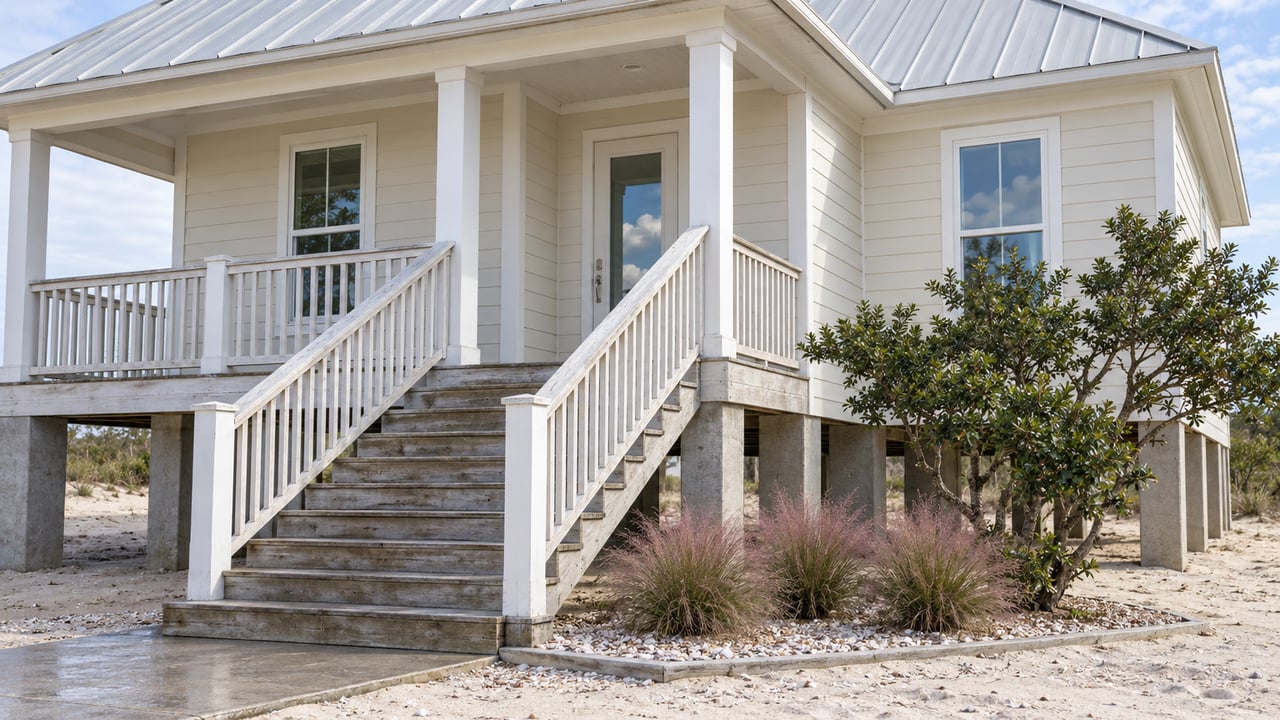
Seacrest Beach II broke ground in 1996 under developer George Dana "Doodle" Harris, president of Dana Beach Resorts. The plan was explicit New Urbanism: landscaped streets, sidewalks, front porches, rear garages, and walking paths meant to knit the community together on foot rather than by car. The Seacrest Beach Owners Association took over from the developer in October 2004. The 14-acre Greenway and the interior walking trails followed in 2007. The Lagoon itself, along with its surrounding common areas, wasn't purchased from the developer until 2010.
None of that timeline mentions a tram, because the tram isn't part of the original design. It's a seasonal patch for one specific problem the New Urbanism plan didn't solve: the community's interior sits on one side of a state highway, and its deeded beach access sits on the other, next to Sunset Beach. In peak season, with rental turnover measured in the hundreds of guests a week, ferrying that volume across 30A on foot isn't realistic. So the HOA runs a tram.
Once October ends and the tram parks, that patch comes off. What's left is the community exactly as it was platted: over a mile of shaded interior trails, a stretch of the regional Timpoochee Trail for biking, and streets with names like Flip Flop Lane and Beach Bike Way that were never designed with car traffic as the priority. Getting to the beach in November looks less like waiting for a shuttle and more like the walk the original plan assumed everyone would take.
The Lagoon Stops Being A Rental Amenity And Goes Back To Being A Neighborhood Pool
At the center of the community sits the Seacrest Lagoon, a 378,000-gallon pool that ranks among the largest private pools in Florida. It's open year-round, heated only by the sun, with a grassy amphitheater alongside it that hosts concerts, festivals, and private events, plus daytime lawn use for bocce or frisbee.
In July, that pool deck functions as an extension of every rental home within walking distance, cycling through a new set of vacationing families every few days. By November, with the tram gone and the seasonal renter volume down, the same pool becomes what its footprint always suggested it could be: a neighborhood gathering point where the same faces show up on the same afternoons. The Seacrest Beach Café, operated by Crust Artisan Bakery and serving seafood baskets and po-boys poolside, keeps the same menu through the shift. What changes is who's ordering it.
The Village Quiets Down, But Not Evenly
The Village of South Walton, Seacrest's commercial core, holds the bulk of the community's restaurants and shops around Peddlers Pavilion, a cluster of boutique huts, bike rentals, and an outdoor pub built around live music. Foot traffic through Peddlers is driven heavily by the same tram routes that feed the beach, since a large share of visitors walking the Village came off a tram stop rather than parking a car there directly. When the tram stops, that particular current of foot traffic drops first and fastest.
What doesn't drop at the same rate is dinner. LaCo, the Latin-inspired kitchen in Seacrest Beach, runs a full bar and daily happy hour from 3 to 5 p.m. regardless of season, and Lola Coastal Italian, chef Tom Catherall's spot in the same stretch, keeps its Italian dinner menu and brunch service running into the cooler months. These are destination reservations for people already living nearby, not impulse stops for someone walking past on the way to a tram stop, so they hold their footing even as the boutique-hut traffic thins.
The One Thing That Was Never Tied To The Tram
If there's a single fixture in Seacrest that makes the tram's seasonality feel almost irrelevant, it's Crabby Steve's Gulf Front Bar & Grill at High Pointe. It's the only true beachfront tiki bar on the entire 30A corridor, and it was never reachable by tram in the first place. The only way in is on foot, either as a High Pointe guest or by walking up from the sand. That access point doesn't change in October any more than it changes in July. For residents, it's a useful anchor: whatever else shifts with the season, the walk up the beach to Crabby Steve's stays exactly the same walk it always was.
Camp Creek Lake, the dune lake that Seacrest's footprint extends toward on the west side, follows the same pattern. It was never part of the tram route or the summer rental circuit. It's simply there, year-round, for whoever wants to paddle it.
What This Actually Changes For A Fall In Seacrest
The generic version of this story tells you fall is a good time to enjoy the beach without crowds. That's true everywhere on 30A and it tells a resident nothing they haven't already lived through five or six Octobers in a row.
The more useful version is this: once the tram parks, the community's own internal geography reasserts itself. The 1.35 miles of shaded trails and the Timpoochee Trail stop being scenery and start being the actual route to the sand. The Lagoon and its amphitheater shift from serving rental turnover to serving whoever's still around on a Tuesday afternoon. The Village's foot traffic drops unevenly, thinning out around Peddlers Pavilion while LaCo and Lola hold their dinner crowds. And Crabby Steve's, immune to all of it, keeps doing exactly what it's always done.
None of this requires the calendar to flip to a new season. It requires the tram to stop, which happens on its own schedule at the end of October, and which reveals a neighborhood that was, from 1996 onward, built to be walked rather than shuttled.
If you're weighing what a home in a community built this way is actually worth to live in day to day, not just to visit, that's the kind of detail worth talking through with someone who tracks it season over season. 850 Properties works this stretch of 30A year-round, in the quiet months as much as the loud ones. Explore Communities to see what else the corridor looks like once the crowds move on.